
The Future of TV is a Superstore: Why “T-Commerce” is TV’s Next Golden Age
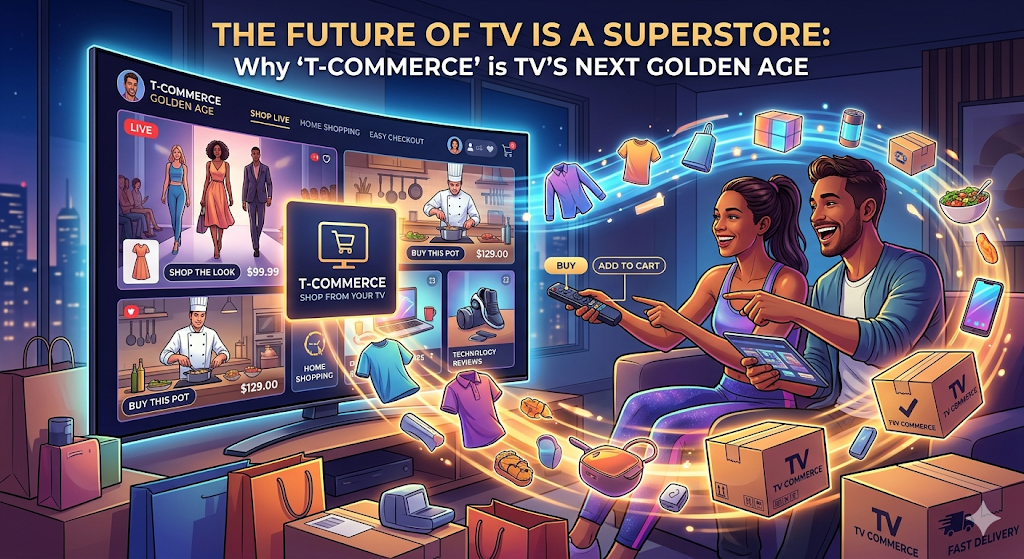
For decades, TV advertising has been based on a very simple model: Companies would pay to air a 30-second commercial during a TV show or a live sports event, and then hopefully people would buy the product advertised when they went to the store. There was no direct link between the commercial and the actual sale of the product.
In 2026, Amazon has officially shattered that disconnect.
There is an ever-developing link between Amazon’s storefront to its video offerings, especially with sports being added to Amazon’s ad platform. The company is saying that the new system will form the basis of what it terms an ‘end to end’ retail advertising system. The online retailer is also launching Thursday Night Football on its Prime Video service in the US as part of a broader strategy to reach more of a core audience of young males to sell space out and increase the volume of ads that can be played to customers.
The Amazon way of retailing on TV and online through their Unified Advertising Platform could be the key to the future of retailing via TV and online streaming. The newly coined term of TV Commerce or ‘T-Commerce’ has brought about a whole new arena for retailers to compete in, and Amazon has got off to a fantastic start.
1. From "Awareness" to "Add to Cart"
For decades, television advertising operated on the simple model of ‘awareness’ of a brand, which led to ‘purchase’ of that brand’s products in a physical retail store after weeks or even months of viewing their ads on TV. But now, that model is being upended by Amazon.
First, Amazon’s advertising on Prime Video can direct viewers to the products they are most likely to buy. For example, a household brand running a commercial for a beverage on Prime Video can reach households where someone on that household’s shopping list has recently purchased similar products on Amazon.com. This is made possible by Amazon’s “authenticated shopping graph” which connects a viewer’s viewing activity on Prime Video to their shopping activity on Amazon.com.
This connectivity enables what advertisers call "closed-loop attribution."
Old School T-Commerce: A beverage brand runs a TV spot, launches a social media campaign, and hopes nationwide sales tick upward over the next quarter.
A brand running an ad for a household beverage brand on Prime Video will be able to see if the viewer clicked on the ad, went to the product detail page of the beverage, and if they purchased the beverage 15 days later.
The ability to measure the impact of TV advertising so much more accurately than ever before has the potential to drive billions of dollars of advertising spend from traditional TV to Amazon’s digital marketing ecosystem.
2. The Mechanics of Shoppable TV
Below are a number of formats Amazon has launched to deliver TV commerce to viewers.
- Interactive Video Ads: These can be paused by remote or even scanned by your phone to shop the featured products, add them to your shopping cart automatically, and allow for instant purchase with your Prime account.
- Shoppable Pauses: However the viewer chooses to pause their viewing of the TV program, the viewer can choose from all sorts of relevant products while the ad is paused and add them to their shopping cart as soon as they press play again.
- Virtual Product Placement: Amazon’s AI is able to virtually place products into TV and movies after they have been shot. For example, a character might be holding a coffee cup with a brand logo on it, or there might be a box of detergent in the living room in the background of a scene. Because the product was placed in the background of a TV show or movie that the viewer likes, they are likely to purchase the product.
TV advertising turns into a shopping experience as every viewer can purchase products they have seen in their favorite movies and series instantly and in a most convenient manner – from the couch in their living room.
3. The Power of the Unified Ad Console
Amazon unleashed a massive amount of new advertising tools and features at their annual ad conference.
Traditionally, Amazon managed search, display, and video advertising in separate systems. With the release of the Unified Advertising Platform, all of a brand’s advertising campaigns can live in one system. Search signals and television viewing signals can now inform each other in real time.
For example, a customer that searches on their mobile app for “organic sunscreen” can now see a high definition video ad for the premium sunscreen brand on Prime Video while watching a movie or TV show.
The Unified Advertising Platform also allows small businesses to access TV advertising in ways that were previously not possible. For example, the AI-powered “Creative Agent” can create high-quality video variants as well as produce a story board for a TV ad in a matter of seconds. As a result, brands can now test and launch TV ad campaigns for the price of online display ads, taking the multi-million dollar production budget out of the equation.
4. The Challenge for Brands: Adapting to T-Commerce
The new way of retailing is very challenging for established companies. They have to adapt as quickly as possible to TV commerce.
It will require Brands to get used to treating their video creative as ‘dynamic digital assets’ – ie highly targeted video clips.
Instead of generic commercials, companies can use multi-clip video to specifically market the different features of a product to different target audiences.
In preparation for T-Commerce, brands will have to focus on what they refer to as ‘Retail Readiness’ – essentially making a checklist of a number of key criteria and verifications in relation to the product(s) concerned: Are the product’s Amazon detail page reviews up to par? Is stock available for immediate purchase? What are the product’s shipping times like? Everything that you would find out about a retailer’s online shop will need to be ‘retail perfect’ prior to an expensive TV campaign being launched – in perfect sync with the retailer’s inventory.
Mastering Contextual Relevance: With many forms of media, brands will have to focus on how to make their products relevant during the exact moment in time that the consumer is viewing the content. A quick-delivery snack brand, for example, would be a relevant ad during a third-down play in a live football game. The viewer would then have time to order the product before the next play begins.
Conclusion: The Convergence of Media and Marketplace
The “Everything Store” is no longer just the place where customers can go to look for products for sale in an online catalog. Today, Amazon is a large and diverse entertainment network for viewers to enjoy television, movies, and a variety of other content in addition to a very large and ever-changing store.
Amazon is revolutionizing retail by enabling customers to purchase products discovered at the same time of watching their favorite shows, transforming the screen into the front door of the world’s largest department store.